Birds of Texas: A Field Guide
Discover the diverse avian world of Texas! This comprehensive guide, utilizing resources like YouTube and dishcuss.com, details identification, habitats, and migration patterns of Texas birds.
Explore common backyard species, majestic raptors, vibrant songbirds, and fascinating water birds—all within the Lone Star State’s unique ecosystems.
Texas, a vast and ecologically diverse state, presents an exceptional destination for birdwatchers of all levels. From the Gulf Coast marshes to the arid West Texas landscapes, over 600 bird species grace the skies, making it a premier birding location.
Beginners will find ample opportunities to observe common backyard birds, while experienced birders can seek out rare and migratory species. Resources like online field guides (dishcuss.com) and video identification (YouTube) are invaluable tools.
Successful birdwatching requires patience, appropriate equipment – binoculars are essential – and a keen eye for detail. Understanding migration patterns, as highlighted in recent data, enhances the experience. Prepare to be captivated by the beauty and variety of Texas birds!
Geographic Regions and Bird Diversity
Texas’ diverse geography dictates its remarkable bird diversity. The Gulf Coast boasts a rich array of water birds, including those detailed on dishcuss.com, thriving in marshlands and estuaries. Central Texas offers a mix of woodlands and grasslands, attracting songbirds and raptors.
West Texas, with its desert environment, hosts unique species adapted to arid conditions. The Piney Woods in East Texas provide habitat for woodpeckers and other forest dwellers. Migration routes funnel birds through the state, increasing species counts seasonally.
Understanding these regional variations is crucial for targeted birdwatching. Online resources, like YouTube identification guides, can help pinpoint species likely to be found in specific areas of Texas.
Common Backyard Birds of Texas
Transform your backyard into a birdwatching haven! Texas backyards frequently host Northern Cardinals, easily identified by their vibrant red plumage, and Eastern Bluebirds, known for their cheerful song. These species, alongside others, benefit from feeders and water sources.
Common visitors also include Mourning Doves, House Finches, and various sparrow species. YouTube resources offer excellent visual guides for identifying these frequent fliers. Providing native plants attracts insects, a vital food source for many birds.
Observing these birds offers a delightful connection to nature, and contributes to citizen science initiatives tracking bird populations across Texas.
Water Birds of Texas
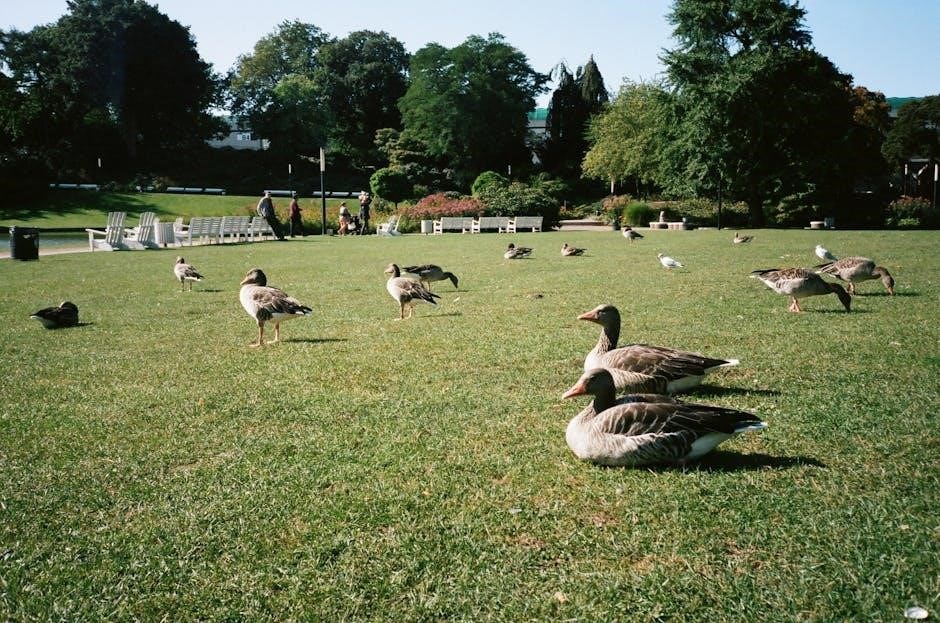
Texas’ extensive coastline and inland waterways support a remarkable diversity of water birds. Coastal regions teem with species like herons, egrets, and various shorebirds, foraging in the shallows. Inland, lakes and rivers attract ducks, geese, and wading birds.
Resources like dishcuss.com highlight 46 different water bird species found in Texas, offering identification guides. These birds play crucial roles in wetland ecosystems, controlling insect populations and serving as indicators of environmental health.
Observing their behaviors – feeding, nesting, and migrating – provides fascinating insights into Texas’ natural world.
Coastal Water Birds
Texas’ Gulf Coast provides critical habitat for numerous water bird species. Shorebirds, like sandpipers and plovers, are commonly seen probing the sandy beaches for invertebrates. Elegant terns and gulls soar overhead, while pelicans dive for fish.
Herons and egrets gracefully wade through the shallow marshes, patiently stalking their prey. Dishcuss.com notes the abundance of tall water birds in these areas. These coastal birds are adapted to the salty environment and dynamic tides.
Protecting these fragile ecosystems is vital for their continued survival.
Inland Water Birds
Texas’ lakes, rivers, and reservoirs support a different array of water birds than the coast. Ducks, such as Mallards and Teal, are frequent visitors, especially during migration. Geese can also be observed in large flocks, foraging in fields near water sources.

Grebes and coots dive for aquatic vegetation, while various species of wading birds, including herons and egrets, utilize freshwater marshes. These inland habitats provide essential resting and feeding grounds for migratory birds.
Conservation efforts are crucial to maintain the health of these vital freshwater ecosystems.
Raptors of Texas (Hawks, Eagles, Owls)
Texas skies are graced by a diverse range of raptors, including hawks, eagles, and owls. These apex predators play a vital role in the ecosystem, controlling populations of rodents and other small animals. Identifying these birds requires attention to size, shape, and plumage patterns.
Common hawks include Red-tailed Hawks and Cooper’s Hawks, while the majestic Bald Eagle can be spotted near large bodies of water. Several owl species, such as the Great Horned Owl, are nocturnal hunters.
Understanding their hunting strategies and habitats is key to appreciating these magnificent birds.
Identifying Common Texas Hawks
Successfully identifying Texas hawks relies on observing key features. The Red-tailed Hawk, a frequent sight, boasts a reddish-brown tail and broad wings. Cooper’s Hawks are smaller, with a distinctive slate-gray back and barred underparts, often seen darting through woodlands.
Sharp-shinned Hawks, even smaller, exhibit similar markings but are more agile in flight. Harris’s Hawks often hunt in pairs, displaying a unique white band on their wings. Observing flight patterns, size comparisons, and habitat preferences are crucial for accurate identification.
Resources like field guides and online databases aid in distinguishing these impressive raptors.
Owl Species Found in Texas
Texas hosts a diverse array of owl species, each adapted to unique niches. The Great Horned Owl, a large and powerful predator, is recognizable by its prominent ear tufts. Eastern Screech-Owls, smaller and more secretive, come in both gray and reddish morphs, blending seamlessly into tree bark;
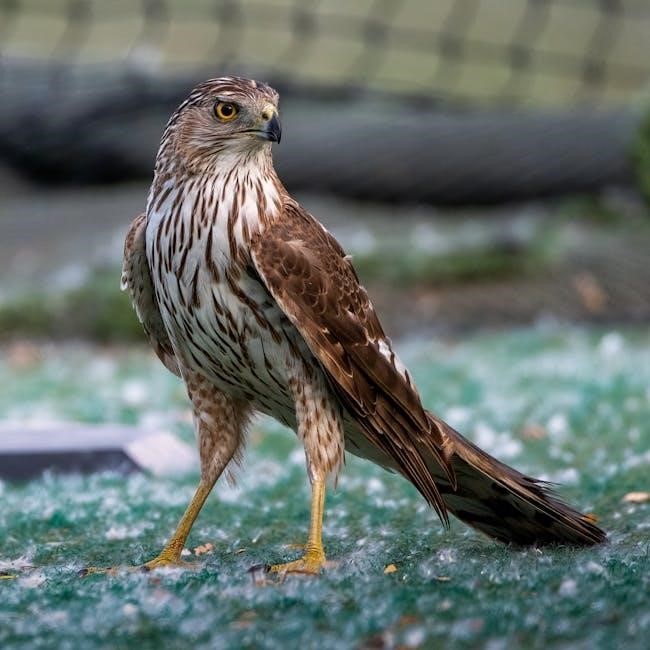
Barn Owls, with their heart-shaped faces, are often found in open habitats, while Barred Owls prefer dense woodlands. Burrowing Owls uniquely nest underground, inhabiting prairie dog towns. Identifying owls relies on observing size, facial features, and distinctive calls.
Careful observation and listening are key to spotting these nocturnal hunters.
Songbirds of Texas
Texas boasts a vibrant community of songbirds, enriching the landscape with their melodies and colors. The Northern Cardinal, a familiar sight, displays brilliant red plumage in males, while females exhibit a more subdued reddish-brown. Eastern Bluebirds, with their striking blue and orange hues, grace open woodlands and fields.
Other common species include Painted Buntings, known for their rainbow-like coloration, and Northern Mockingbirds, masterful mimics of other bird songs. Identifying songbirds involves noting plumage patterns, size, and, crucially, their unique vocalizations.
These birds play a vital role in seed dispersal and insect control.
Northern Cardinal
The Northern Cardinal (Cardinalis cardinalis) is a beloved and easily recognizable songbird throughout Texas. Males are vividly colored, displaying brilliant red plumage with a distinctive crest, while females exhibit a more subtle reddish-brown hue with red accents. They are year-round residents, adding a splash of color to winter landscapes.
Cardinals are frequently found in gardens, woodlands, and shrubby areas, feeding on seeds, fruits, and insects. Their cheerful, whistling song is a common sound, and they are known for their pair bonding, often remaining mates for life.
Look for them at backyard feeders!
Eastern Bluebird
The Eastern Bluebird (Sialia sialis) is a stunningly beautiful thrush found across much of Texas, particularly in open woodlands, orchards, and fields. Males boast vibrant blue upperparts and a rusty-red breast, while females display more subdued blue and gray tones. These birds are cavity nesters, often utilizing birdhouses provided by humans.
Bluebirds primarily feed on insects during the breeding season, switching to berries and fruits in the fall and winter. Their melodious song is a welcome sound in rural landscapes. Conservation efforts have helped restore bluebird populations.
Attract them with mealworms!

Game Birds of Texas
Texas supports a variety of game birds, popular with hunters and vital to the state’s ecosystem. The Wild Turkey (Meleagris gallopavo) is a large, ground-dwelling bird found in forested areas, known for its impressive display during mating season. The Northern Bobwhite Quail (Colinus virginianus) is a smaller, covey-dwelling bird inhabiting grasslands and shrublands.
These birds face habitat loss and fragmentation, impacting their populations. Management practices, including habitat restoration and regulated hunting seasons, are crucial for their conservation. Both species contribute significantly to the state’s outdoor recreation economy.
Responsible hunting is key!
Wild Turkey
The Wild Turkey (Meleagris gallopavo) is a magnificent, large ground-dwelling bird found throughout much of Texas, particularly in forested and woodland habitats. Males, known as toms or gobblers, are renowned for their elaborate courtship displays, including strutting and gobbling sounds.
Females, called hens, build nests on the ground, laying 10-14 eggs. These birds are omnivorous, feeding on acorns, berries, insects, and small reptiles. Wild Turkeys are a popular game species, supporting hunting opportunities and conservation efforts.
Habitat preservation is vital for their continued success.
Northern Bobwhite Quail
The Northern Bobwhite Quail (Colinus virginianus) is a small, ground-dwelling bird common across Texas grasslands and shrublands. Recognizable by its distinctive “bob-white” call, this quail thrives in areas with coveys, family groups that forage together for seeds, insects, and berries.
These birds are highly sensitive to habitat changes, making them indicators of ecosystem health. They nest on the ground, concealed within vegetation, and face challenges from predators and habitat loss.
Conservation efforts focus on restoring grasslands and promoting responsible land management practices.
Hummingbirds of Texas
Texas serves as a crucial migratory corridor and breeding ground for numerous hummingbird species. These tiny, iridescent birds are renowned for their aerial agility and nectar-feeding habits, playing a vital role in plant pollination.
Several species grace the state, including the Ruby-Throated and Black-Chinned Hummingbirds, often spotted in gardens and near flowering plants. Attracting hummingbirds involves planting native nectar-rich flowers and providing fresh water sources.
Observing these jewels of the avian world offers a captivating glimpse into nature’s delicate balance and beauty.
Ruby-Throated Hummingbird
The Ruby-Throated Hummingbird, a common eastern North American species, frequently visits Texas during spring and fall migration. Males boast a brilliant ruby-red throat patch, a striking feature used in courtship displays. Females and immature birds exhibit a white throat with some dark speckling.
These tiny birds measure around 3.25 inches long and weigh only about 3 grams. They are known for their rapid wingbeats, allowing them to hover while feeding on nectar from flowers like trumpet vine and salvia.
Providing feeders with sugar water can attract these delightful visitors to your Texas garden.
Black-Chinned Hummingbird
The Black-chinned Hummingbird is another frequent visitor to Texas, particularly during migration and breeding seasons. Males are identified by their iridescent purple throat patch, bordered by a narrow black band – hence the name. Females display a pale throat with some spotting, and lack the vibrant coloration of the males.
Measuring approximately 3.5 inches in length, these hummingbirds are slightly larger than the Ruby-throated species. They favor habitats near water sources, feeding on nectar from a variety of flowering plants.
Attracting them to your yard involves planting native flowers and maintaining hummingbird feeders.
Woodpeckers of Texas
Texas boasts a diverse woodpecker population, playing a crucial role in forest ecosystems. These birds are easily recognized by their strong bills, zygodactyl feet (two toes forward, two back), and stiff tail feathers used for support while climbing trees.

Several species inhabit the state, ranging in size and coloration. They forage for insects beneath bark, drill for sap, and create nesting cavities in trees. Common species include the Downy Woodpecker and the Red-Bellied Woodpecker, each with distinct markings and behaviors.
Woodpeckers contribute to forest health by controlling insect populations and creating habitats for other animals.
Downy Woodpecker
The Downy Woodpecker, Dryobates pubescens, is North America’s smallest woodpecker, commonly found throughout Texas. Measuring around 6-7 inches in length, males possess a small red patch on the back of their heads, absent in females.
These birds exhibit black and white plumage, with a white stripe down the center of their backs. They frequent woodlands, orchards, and suburban areas, foraging for insects and larvae on tree branches and bark; Their drumming is a quiet, rapid-fire sound.
Downy Woodpeckers readily visit suet feeders, making them a popular sight for birdwatchers.
Red-Bellied Woodpecker
The Red-bellied Woodpecker, Melanerpes carolinus, is a striking bird found across Texas, though its belly isn’t always vividly red! Reaching 9-12 inches, it’s larger than the Downy Woodpecker. Both sexes exhibit a bright red cap extending from the forehead to the nape.
Their plumage is primarily black and white, with a pale reddish wash on the belly – hence the name. They inhabit forests, woodlands, and suburban areas, feeding on insects, fruits, and nuts. Their loud drumming echoes through the trees.
Red-bellied Woodpeckers are frequent visitors to suet feeders and bird tables.
Migratory Birds in Texas
Texas serves as a crucial crossroads for numerous migratory bird species, experiencing significant avian traffic during spring and fall. The state’s location on several major flyways makes it a vital stopover for birds traveling between breeding and wintering grounds.
Spring migration, peaking in April and May, sees birds heading north to breed, while fall migration, from September to November, witnesses their southward journey. These movements are influenced by food availability, weather patterns, and instinctual cues.
Many songbirds, shorebirds, and raptors utilize Texas as a refueling station during these long journeys.
Spring Migration Patterns
The spring migration through Texas, generally occurring from late March through May, is a spectacular event. Birds arrive from Central and South America, driven by increasing daylight and warmer temperatures, seeking breeding grounds further north.
Key species observed during this period include warblers, tanagers, and orioles, alongside various shorebird species utilizing coastal habitats. The timing of peak migration varies depending on weather conditions and specific species.
Coastal areas and central Texas act as crucial stopover points, providing essential resources for these long-distance travelers.
Fall Migration Patterns
Texas serves as a vital corridor for fall bird migration, typically spanning from late August through November. Birds depart from their northern breeding grounds, heading south towards warmer wintering locations in Mexico and Central/South America.
Notable species include raptors like hawks and eagles, alongside songbirds and waterfowl. This southward movement is fueled by decreasing daylight and dwindling food supplies in northern regions.
The Texas coastline becomes incredibly important, offering crucial resting and feeding grounds for migrating birds preparing for their long journey. Weather patterns significantly influence the timing and intensity of this migration.
Bird Identification Tips
Successful bird identification relies on careful observation. Note the bird’s size, shape, and overall color patterns. Pay attention to key field marks – unique features like wing bars, eye rings, or tail shapes.
Observe the bird’s behavior: how it feeds, flies, and interacts with its environment. Listen carefully to its song or calls; these are often distinctive. Utilize field guides and online resources like YouTube for comparison.
Consider the habitat and geographic location. Knowing which species are common in a particular area narrows down possibilities. Practice regularly to hone your skills and build confidence!
Resources for Texas Birdwatchers
Numerous resources enhance the Texas birdwatching experience. Websites like dishcuss.com offer detailed species information and discussion forums. YouTube channels, such as those showcasing backyard bird identification, provide visual learning tools.

Texas Parks and Wildlife Department (TPWD) offers valuable guides and conservation updates. Local Audubon Society chapters host field trips and workshops. Online databases, like eBird, allow you to report sightings and explore bird distribution maps.
Invest in quality field guides specific to Texas birds for portable identification. Remember to utilize both digital and print resources for a comprehensive approach!
Conservation Status of Texas Birds
The conservation status of Texas birds varies greatly, with some species facing significant threats. Habitat loss, due to urbanization and agriculture, is a primary concern. Climate change also impacts migration patterns and breeding success.
Texas Parks and Wildlife Department actively monitors bird populations and implements conservation programs. Several species are listed as threatened or endangered at the state and federal levels, requiring focused protection efforts.
Birdwatchers can contribute by reporting sightings, supporting conservation organizations, and practicing responsible birding ethics to help preserve Texas’s avian biodiversity.
Best Birdwatching Locations in Texas
Texas boasts incredible birdwatching destinations! The Gulf Coast offers prime viewing for migratory and coastal species, including High Island and Galveston Island. Central Texas hotspots like Enchanted Rock State Natural Area attract diverse birdlife.
For inland birding, explore the Hill Country and Big Bend National Park. The Rio Grande Valley is renowned for its unique subtropical birds. Numerous state parks and wildlife management areas provide accessible viewing opportunities.
Utilizing online resources and local birding clubs can enhance your experience, revealing hidden gems and current sightings across the state.
Equipment for Birdwatching in Texas
Essential gear elevates the Texas birdwatching experience. Binoculars are paramount – 8×42 or 10×42 magnification provides excellent detail and field of view. A sturdy tripod enhances stability for prolonged observation.
Field guides, both physical and digital, are crucial for identification. Consider specialized Texas bird guides for accuracy. Comfortable hiking boots are vital for navigating diverse terrains.

Don’t forget a notebook and pen for recording observations, and appropriate clothing for varying weather conditions. A camera with a zoom lens captures memorable sightings!
Binoculars
Binoculars are arguably the most important tool for any Texas birdwatcher. A magnification of 8x or 10x, paired with an objective lens of 42mm, strikes a balance between detail and brightness. Look for binoculars with fully multi-coated lenses for optimal light transmission, crucial in varied Texas habitats.
Waterproof and fog-proof models are highly recommended, given the state’s humid climate. Consider weight and ergonomics for comfortable extended use. A wider field of view aids in locating and tracking fast-moving birds.
Investing in quality binoculars significantly enhances the birding experience!
Field Guides
A comprehensive field guide is essential for identifying the diverse birdlife of Texas. Look for guides specifically focused on Texas or the South-Central United States for the most relevant species information. These guides typically include detailed descriptions, illustrations, range maps, and vocalization information.
Consider guides with multiple images showcasing variations in plumage—important for identifying birds in different seasons or life stages. Digital field guide apps for smartphones are also valuable, offering bird songs and updated information.
Reliable guides empower accurate identification and deepen your understanding of Texas birds!